The wonders of knots
One of the ways my father, Dave, used to keep us busy on rainy days on the boat was to hand us each a length of rope and an old book on knots. Going by the decrepit condition of the book, he must have had it since he was a child himself. There were drawings after drawings of a library of knots. He said it behoved us as sailors to learn them all.
Even though there were step-by-step hand-drawn sketches on how to make each knot, as well as written instructions, we struggled.
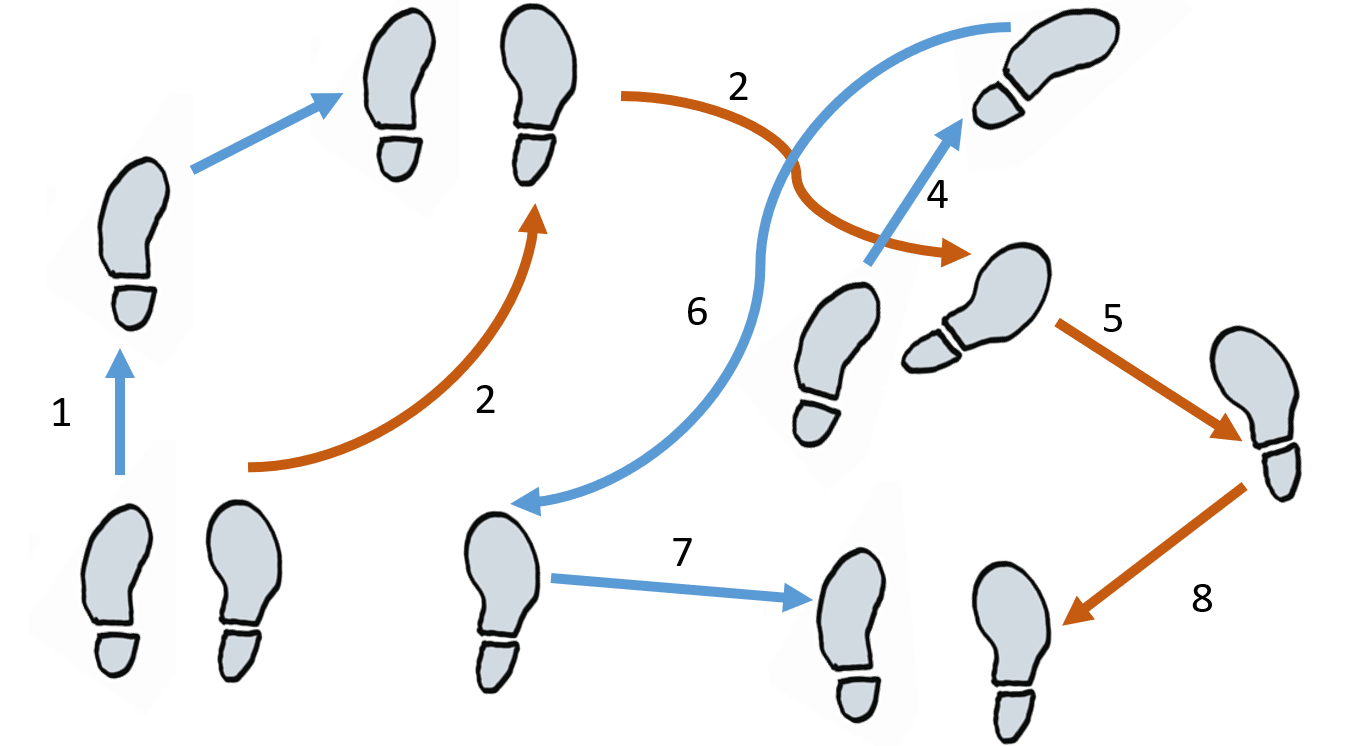
It was like learning to tango with those drawings of footsteps.
Dave's way of keeping our attention was to tie various knots with different strengths of rope all over the main cabin and galley. We could remove the knots only after we had made the knot correctly with another rope. When we had done all the knots to satisfaction, we could then disappear into the forward cabin and laze the rest of the day away reading.
What we learnt was that tying a knot properly is not just in and out and twist about. It is about the proper tension, the way you weave the rope, what object you want to attach the rope to, and for what purpose the rope is there.
Even though each knot is multi-functional, it usually has a prime purpose. The following is a list of knots we needed to master*:
Clove hitch – we used this knot to hang bumpers from the handrailing, so they rest against the side of the hull.
Coiling technique – This was one of our prime jobs, coiling all deck lines and halyards so, they could be stored neatly in their allocated storage area.
Two half hitches – A strong, secure knot for tying a rope to a fixed object. Ideal when mooring at a wharf or bollard, where lines are often under tension for extended periods.
Bowline – This is the go-to knot for mooring at a floating buoy or mooring point.
It creates a secure, non-slipping loop that’s easy to untie even after heavy loading.
Figure eight knot – A stopper knot used to prevent a line, e.g. jib sheets, from slipping through a block or cleat.
Double sheet bend – Best for joining two ropes of different diameters. A go-to knot to tow a dinghy by connecting its painter to a heavier towline.
Anchor bend (also called double fisherman’s bend) – We used it when tying rope to a ring or anchor chain. So helpful when you need to extend an anchor chain with a rope section if the anchorage is deep.
Slippery hitch – Also excellent when you need a knot that can be quickly released, even under tension. Best used when you expect to need a fast getaway or want to undo a line in a hurry (e.g. at a wharf when fuelling).
The ultimate knotting skill I learnt was from a Swedish sailor who showed me how to make a bowline knot using only one hand. I could jump off the boat onto a wharf with the bow sheet, wrap the sheet around or through some part of the wharf, then twist my hand in a fancy manner, and voilà: a bowline knot. Boy, did that make me feel cool.
(* Kind of cuffed, I remember the knots and, with a bit of help from the internet, their names!)
Comments