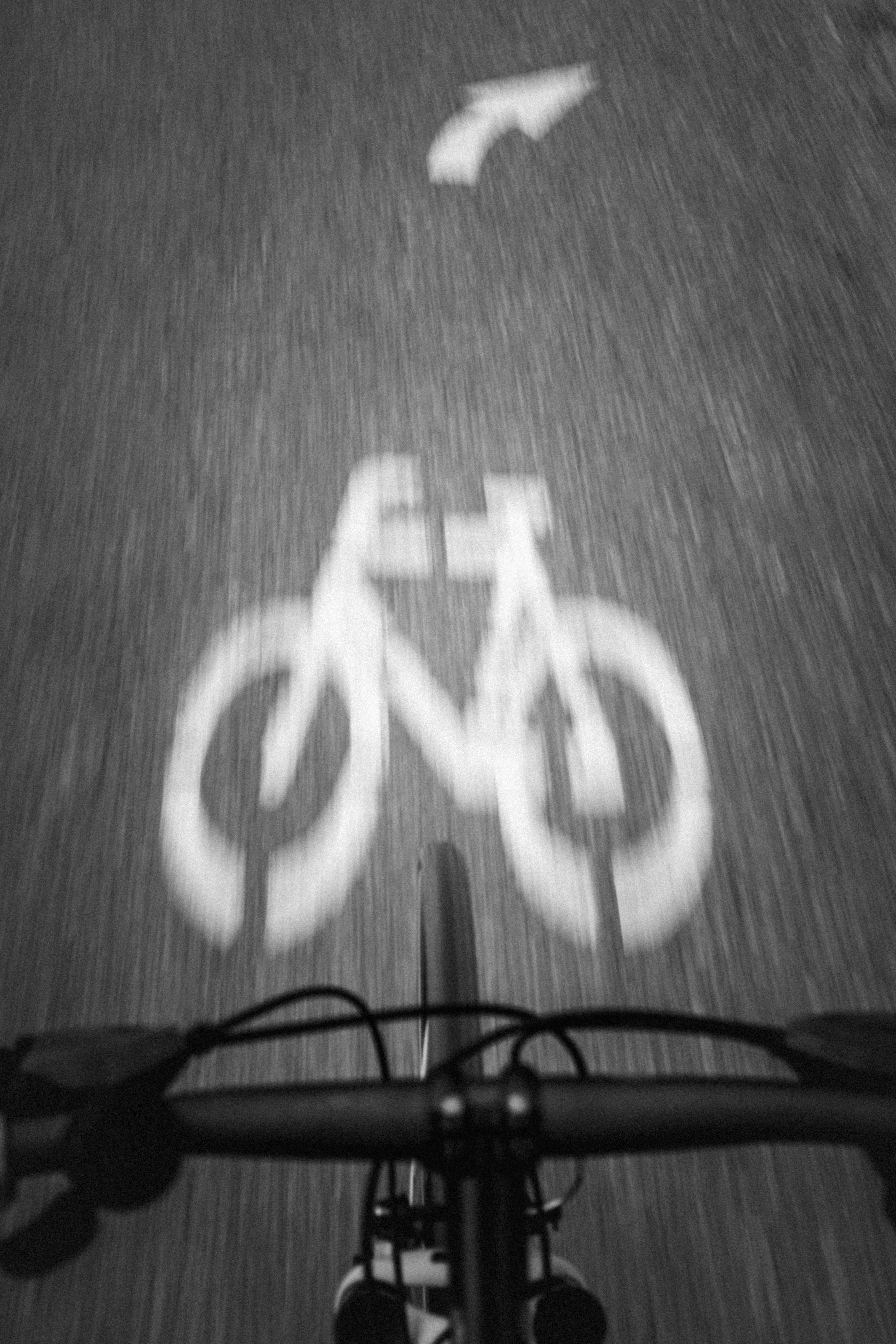
Coasting hands-free
Picture someone riding a bicycle down a smooth road, hands off the handlebars. There is balance in their body, a sense of ease, and a bit of joy. That image has stayed with me. It feels like the right metaphor for how I have come to experience my relationship with AI. There is movement, some risk, and a kind of trust, even when things wobble.
Over the past two and a half years, I have been exploring how to work with AI, both professionally and personally. I have used it to shape better blog content, design e-learning programs, and work as a ghostwriter.
The journey began with hesitation. I tested things, got frustrated, and fell into the usual traps. Strange outputs, hallucinations, moments where it clearly misunderstood what I needed. Even now, those things still happen. But over time, I stopped thinking of AI as just a tool and started to see it more like a work companion. Not flawless, but steady in its own way.
Writing has always been part of my work. Like many people, I have learned to write across formats. I remember the early days of using XML editors to draft e-learning scripts. At first, it felt awkward, like riding with training wheels. Eventually, those tools became familiar, and the deeper challenge of writing content that felt relevant and human became more satisfying.
This year, I took part in the AI & Learning Design Bootcamp with Dr Philippa Hardman. It stretched me in the best possible way. Intellectually, it felt like choosing to cross the Alps on a bike. Some parts were difficult, not just technically, but also philosophically. Others were full of energy and momentum. The course showed me what is possible when AI is used with intention. No one has fully figured it out yet, but the shift is already underway. Learning is changing, and we have the chance to help shape what comes next.
At the same time, I have been on a very different kind of journey, which is this Old Lady At Sea. I started writing about the experience even before I left. Since returning, friends have encouraged me to turn that journey into a book. I am still not sure whether the book will focus on the voyage or take a different shape. But what they keep returning to is the value of entering another world and staying in it long enough to see clearly. That alone is worth writing about.
One of those friends is Charlotte. She recently published a powerful book called We Need New Leaders, along with two earlier novels. She is one of the writers I admire most. Her encouragement has meant a great deal over the years. What struck me about her latest book is that she wrote it entirely without any assistance from AI. That’s right, no AI. Just her voice and her discipline. I admire that deeply. Not only because she is a skilled writer, but because that choice took a kind of boldness I am still wrestling with.
When I think about writing a book, it is hard to imagine doing it without AI. During my voyage, it often felt as if I had an editor beside me, someone who could tidy up my grammar, slow me down when I rushed, and help me stay focused. I am a lifelong dyslexic and likely somewhere on the ADHD spectrum, which means I tend to move quickly and often skip over important details. I do not always take the time to explain things as clearly as I could. AI helped me shape those early drafts into something more readable. It gave me the confidence to publish even before I had feedback from another person.
For me, writing freehand is not about doing it alone. It is about knowing and trusting my own process. It is about choosing which tools to lean on, and when to ask for help. It means writing within a framework that feels like mine. One that supports how I think and what I want to say.
That, I think, is what it means to ride hands-free.
Comments