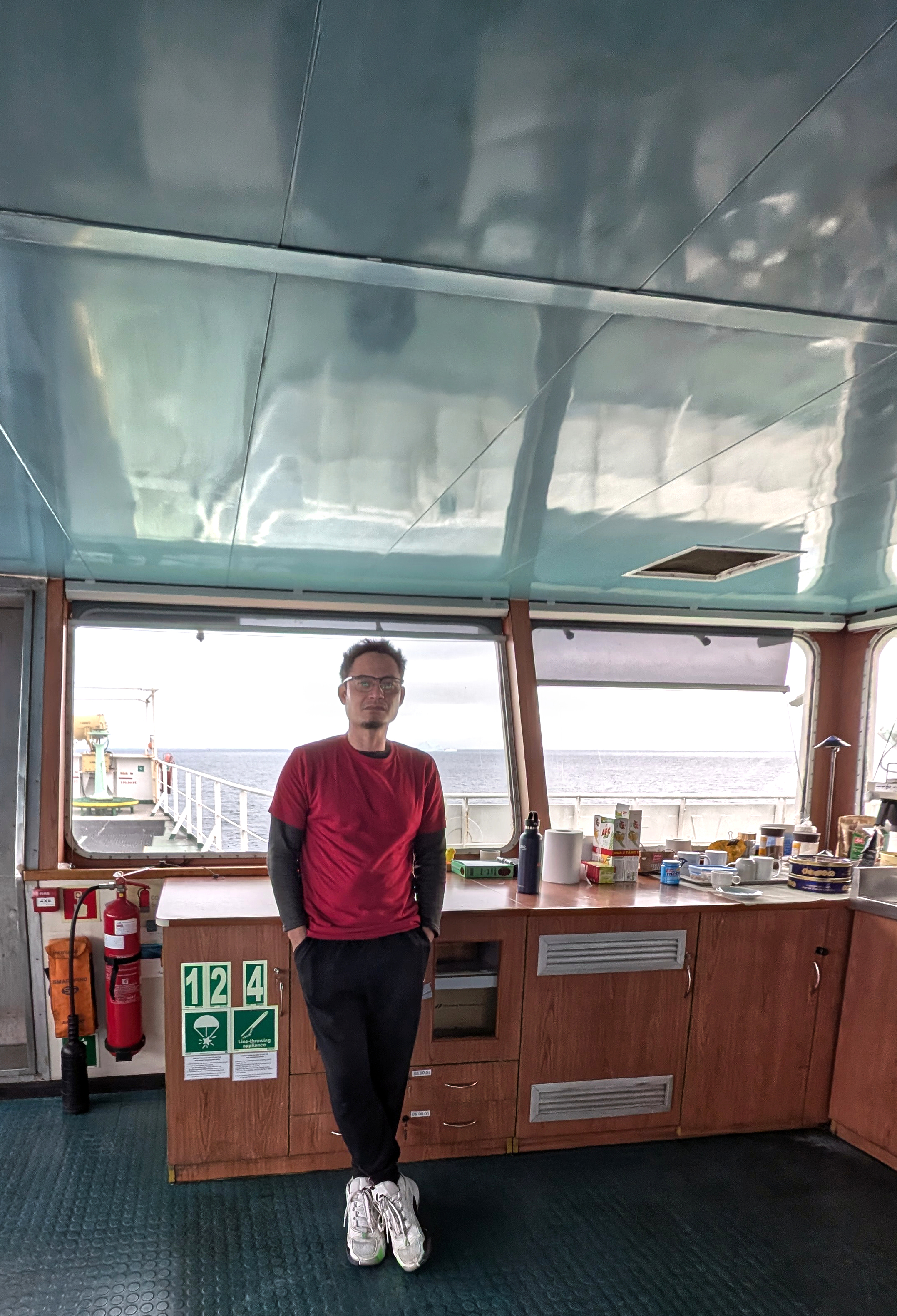
Able Seaman: Michael Micarsos
A steady hand on deck
Every ship has its engines, its navigation systems, its officers. But none of it works without the people who keep the decks in order, climb into the holds, and carry out the relentless physical work a bulk carrier demands. Michael is one of those people. An able seaman, or AB, he is part of the vessel’s backbone. Ask the chief officer why he appreciates Michael and the answer is simple: he never complains, never complicates things, he just does the work, reliably and well.
Michael comes from Cebu City in the Philippines. His path to the sea began later than most. In his mid-twenties, encouraged by family connections, he joined the industry. His father’s cousin had already gone to sea, and the idea stuck. The first contracts were difficult. “The beginning is hard,” he says. “But after four or five times on board, it is okay. Only the first time is hard.”
Since 2018, he has sailed with Oldendorff. Before that, he worked his way up through the ranks: deck boy, OS, then AB. Each step meant more responsibility, more trust, more proof he could be counted on. Now, after more than eight years with the company, he is one of those sailors you can build a watch schedule around.
The work of an AB is not glamorous. It is chipping rust, scrubbing holds, painting and more painting, assisting in mooring operations, and serving as an extra pair of eyes on the bridge during storms or heavy traffic. It is working when everyone else is tired and still keeping alert. On this voyage, Michael has been at sea for six months already, with one or two more before he can go home.
When asked what he likes about the job, he laughs. “Working and cleaning,” he says. But his manner shows steadiness, not resignation. He does what is needed, jokes with the deck boys, and lightens the hours. He knows the strength of a crew is not in speeches but in being a dependable presence.
Like many of his colleagues, he has sailed across the world: South America, China, Singapore, Spain. Ports that sound exotic to outsiders but to him are mostly glimpsed from the deck, since shore leave is rare. This time in Spain they may have six days while the ship discharges, perhaps enough to step outside the gates. Perhaps not. Either way, he takes it as it comes.
Home is always on his mind. His wife lives in the Philippines near her parents, while his mother lives elsewhere. His father has passed away. They keep in touch daily thanks to the ship’s wifi. He sends photos and videos but avoids showing storms or rough seas. There is no need to worry people unnecessarily.
Life on board is long stretches of routine broken by moments of intensity. In storms, Michael is called to the bridge as an extra lookout or to steer if conditions demand it. He has been with the ship in Canada among the icebergs, shivering in a light sweatshirt while the wind cut across the deck. Beautiful, he says, but very cold. When the work is done, he relaxes with computer games or basketball on deck. Small things, but essential when months stretch into each other.
What stands out is not a single story but his consistency. The chief officer puts it plainly: Michael and the other ABs are always in sync, always able to carry out the hard work without fuss. They form the foundation that makes the rest of the crew’s jobs possible. Without them, the ship could not load, could not sail, could not function.
Some people are noticed because they speak the loudest. Others, like Michael, are noticed because everything runs more smoothly when they are there. He will never demand attention, but everyone knows they can trust him. And that trust—watch after watch, voyage after voyage—is what holds life at sea together.
Comments